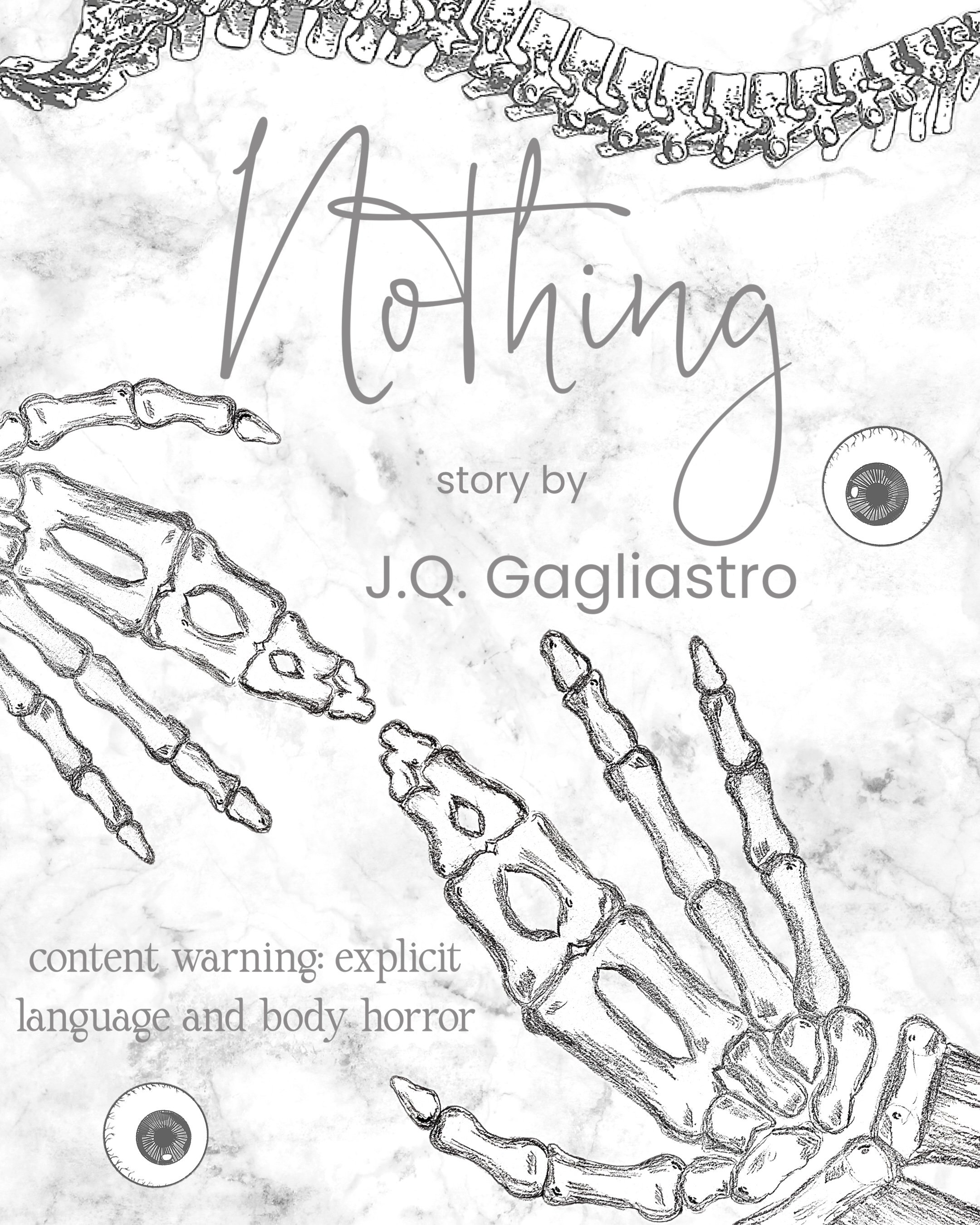
It was early fall when the poet sat at the same park table and noticed the freckle on his palm. He had never noticed it before. Had it always been there?
The sun was nailed to the sky, and leaves crashed into light.
He was an old man, but he felt young. He had dreams like young men do—dreams too real to be just dreams.
He came to the park every day, laid a cloth on the table, and set out his pen and his paper. And he wrote.
He wrote sonnets for couples and limericks for teens. He even gave an ode to a squirrel who pilfered his sandwich.
He didn’t think twice about who received poems, as long as he brightened their days.
A girl holding a book passed him a dollar.
He smiled and delivered her a haiku.
A tall tree of life
With branches long and written.
Pages crash like leaves.
She smiled back, gripped her book, and walked away. She was the only one who stopped by that day.
The sun crested the buildings, and it was time to go home. As he sat before his bowl of stew, he noticed the freckle on his palm had grown into a mole.
A few weeks later, when he smoothed the cloth onto the park table, he thought about all the things he wished he had done when he was younger. He wished he had learned to sail. He wished he had taken his mom on a trip. And he of course wished he had published that book of poetry.
A young man with a smile so deep passed him a dollar.
The poet uncapped his pen and got to work. He held out the poem to admire it in the sun. The ink was still fresh, it glistened.
The young man thanked him and walked away, crunching leaves beneath his feet. He was the only one who stopped by that day.
The poet packed up his things in the fleeting light when he felt something strange in his finger. He dropped his notebook, lifted his hand, and straightened his glasses. His pointer finger and his middle finger were cramping together. He tried to flex the fingers apart, but they were fused. So, he walked to the store and bought more bananas.
Not a month later, the park was barren and so were the trees. As he sat at the park table, he twiddled his thumbs. The mole had grown to the size of a dime, and his two fingers still clung together. His writing was clumsy but legible nevertheless.
He wrote. Only, no one was there to receive their haiku. He tried finding people by the river, but the wind was one of November.
So, he packed up his things and started for home. He held his notebook and his pen close to his chest when he felt another pang. He lifted his hand and straightened his glasses. His ring finger and his pinky were cramping together.
He tightened his jaw, pulled at his pinky, held his hand to the sky, and saw light through his skin—the skin between his pinky and his other finger.
When the Christmas village came, the park was bustling with holiday shoppers. This time of year always brought warm poems to mind.
The poet sat at his table, his pen almost dry.
His syndactylous fingers proved writing tough. It hurt, in fact, to write.
No one noticed him fumbling with his pen. If they had, they didn’t say anything as they zoomed past him in a snowflurried blur.
On a day like today, he would normally give out six or seven poems. But only one person said hello. It was a little girl with a beanie down to her brows. She passed him a dollar when her mother hollered for her. She ran off, leaving him her dollar.
He sank deeper into his chair and felt another sharp pang. This time, in both hands.
He removed his mittens and looked down. His fingers were straight, flat, and bound together. His thumbs were fused inward. He shot up and threw his things into his bag. He sped homeward, clutching his notebook.
A sharpness struck his sides, and his elbows buckled.
In his bathroom, he clumsily removed his coat and overalls and felt a pang under his arm. He leaned on the sink, looked in the mirror, and raised his arms. A ripping sound came, and he fell to the floor. He looked at his waist and saw blood.
His underarms had fused just like his fingers, his skin torn and raw.
He called his doctor, but he was not in. The front desk encouraged him to go to urgent care.
He walked over to his clothes strewn on the floor and noticed his gait was abnormal. He sat in a chair and removed his socks. His toes were bound together.
When he tried pushing off the chair, his arms wouldn’t move. They were glued to his sides.
He was a naked body on a wooden chair. His heart raced, his breathing became frantic. He looked up at the blank ceiling and blinked away his tears.
A cracking noise came, and he screamed. He looked down and saw his legs fracturing and merging together. The skin of his thighs and calves globbed onto each other.
He slipped off the chair unable to stand and felt another pang around his groin. He craned his neck up and saw his dick contorting around his scrotum. They melted into one genital mass.
He choked on his cries and heard the muffling of the city outside. He looked into his bedroom mirror and saw his ears folding in on themselves. He could no longer hear. He shouted for help, but then his lips lumped together and caved inward. He could no longer speak. Tears poured from his eyes and blurred his vision until he could no longer see.
His nostrils closed. His face collapsed. His body and bones curled and cracked until he was just a ball of flesh. His spine constricted and moved around the ball like a snake. Forehead skin folded over ankle bone. Fingernails jutted out of anal tissue. The ball shrank and shrank until, poof, the poet became nothing at all.
Epilogue
His notebook sat on the floor next to a speck of dust. It was opened to the limerick he wrote for the young man.
There once was a man with a smile so deep
And wishes and dreams he wanted to keep.
They were big, he knew.
So he ate his stew
And swallowed a lot only later to weep.
La Fin.
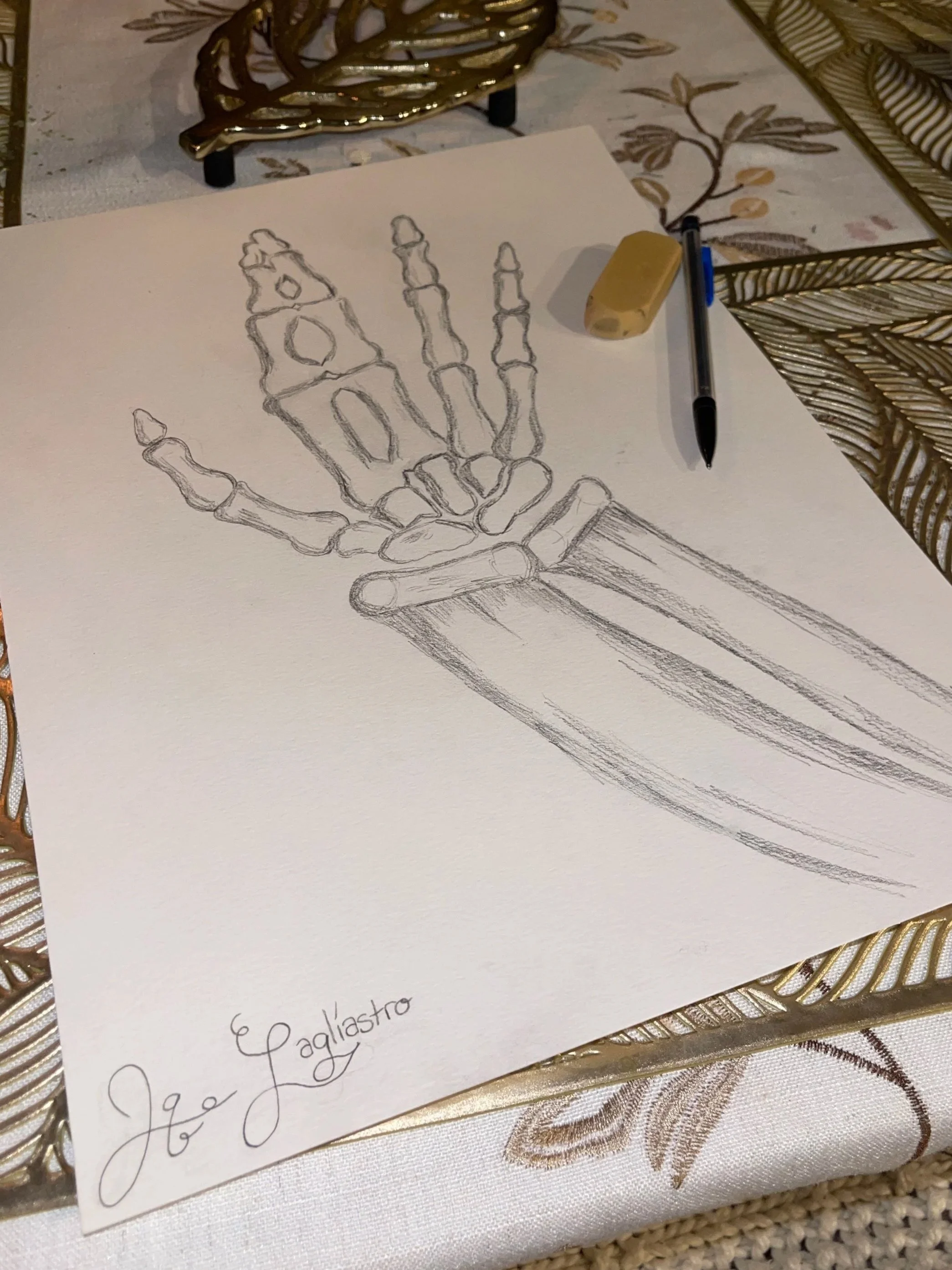
Illustrated by J.Q. Gagliastro